The global ferro alloy market is entering a period of structural transition driven by evolving steel production patterns, changing raw material supply dynamics, and rising energy costs in major smelting regions. Ferro alloys such as manganese alloys and ferro chrome are critical inputs in steelmaking, accounting for nearly 10–15 kilograms of alloy consumption per tonne of crude steel, depending on the steel grade and production process. As global steel production remains above 1.8 billion tonnes annually, the ferro alloy market continues to represent a substantial industrial segment linking mining operations with steel manufacturing. However, the supply-demand balance across manganese and chrome markets has begun to shift, raising questions about whether the sector is approaching the beginning of a new pricing cycle following several years of volatility and margin pressure.
1. Manganese Ore Supply Dynamics and Concentration of Global Production
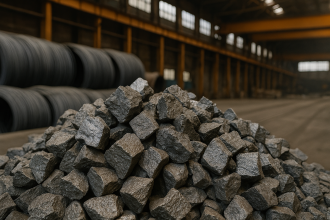
Manganese ore supply remains highly concentrated geographically, with a limited number of producing countries accounting for the majority of global output and export flows. South Africa dominates the international manganese trade, producing approximately 35–38 percent of global manganese ore supply, followed by Australia, Gabon, and Brazil. Combined, these four countries account for nearly 80 percent of seaborne manganese ore exports, making the market particularly sensitive to disruptions in logistics, infrastructure, or mining operations in these regions. Global manganese ore production has fluctuated between 60 and 65 million tonnes annually, with the majority destined for ferro manganese and silico manganese production used in steelmaking.
In recent years, logistical challenges and infrastructure constraints in South Africa have increasingly affected manganese ore shipments, particularly due to rail capacity limitations connecting inland mining regions with export ports. These disruptions have occasionally tightened supply conditions in international markets, contributing to price volatility and shifting trade flows toward alternative suppliers such as Gabon and Australia. At the same time, Chinese demand for manganese ore has remained robust, with imports exceeding 30 million tonnes annually, reflecting the country’s dominant position in global ferro alloy production. The concentration of supply and reliance on seaborne trade have therefore made manganese ore markets particularly sensitive to both operational disruptions and shifts in steel production activity.
2. Ferro Manganese and Silico Manganese Production Trends
Ferro manganese and silico manganese production are closely tied to global steel output because these alloys serve as essential deoxidizing and alloying agents in steelmaking processes. Silico manganese is the most widely used manganese alloy, accounting for approximately 65–70 percent of global manganese alloy consumption, while high-carbon ferro manganese represents a smaller but still critical share of the market. Global production of silico manganese is estimated to exceed 20 million tonnes annually, with China, India, and South Africa among the largest producing countries. These nations collectively account for a substantial share of global alloy output due to their access to manganese ore resources and established smelting infrastructure.
Energy costs play a decisive role in determining the competitiveness of ferro alloy production, as electric arc furnaces used for smelting are highly electricity-intensive. Power prices in major producing countries therefore have a direct impact on alloy production margins and global supply availability. In regions where electricity tariffs have increased significantly, several smelters have faced pressure on operating costs, occasionally leading to production curtailments or temporary shutdowns. Such developments have contributed to fluctuations in alloy supply, reinforcing the cyclical nature of ferro alloy markets and creating periods of tightening availability when demand from steel producers remains stable.
3. Chrome Ore Supply and the Structure of the Ferro Chrome Market
The global chrome ore market exhibits a similar level of supply concentration, with South Africa serving as the dominant producer and exporter. The country accounts for nearly 70 percent of global chrome ore output, supplying the majority of raw material used in ferro chrome production worldwide. Kazakhstan, India, and Turkey represent additional producing regions, although their combined output remains significantly smaller compared to South Africa’s production levels. Chrome ore is primarily used to produce ferro chrome, a key alloying material required for stainless steel manufacturing, which consumes approximately 80–85 percent of total ferro chrome output globally.
Ferro chrome production itself is geographically concentrated in regions with access to both chrome ore reserves and relatively competitive energy costs. South Africa and China remain the two largest producers, although production patterns have evolved in response to changes in electricity tariffs and industrial policies. Rising power costs in South Africa have increasingly affected the profitability of local smelters, leading some producers to export raw chrome ore instead of processing it domestically. This shift has resulted in greater ferro chrome production capacity in China, where imported chrome ore is processed in smelting facilities supported by relatively stable industrial infrastructure.
4. Steel Industry Demand and the Alloy Consumption Cycle
The demand for ferro alloys is fundamentally tied to global steel production levels and the composition of steel products manufactured across different regions. Carbon steels, which represent the majority of global steel output, require manganese alloys during the smelting process to remove oxygen and improve mechanical properties such as strength and durability. Stainless steel production, on the other hand, relies heavily on ferro chrome to provide corrosion resistance and structural integrity. As a result, fluctuations in construction activity, infrastructure investment, and manufacturing output directly influence alloy demand across international markets.
Over the past decade, global crude steel production has remained relatively stable within a range of 1.8 to 1.9 billion tonnes annually, supporting consistent baseline demand for ferro alloys. However, regional shifts in steel production capacity have begun to reshape alloy consumption patterns. Rapid steel industry expansion in countries such as India and Southeast Asian economies has increased regional demand for manganese alloys, while stainless steel production growth in China and Indonesia has strengthened demand for ferro chrome. These structural changes suggest that ferro alloy trade flows may increasingly shift toward emerging steel-producing regions rather than remaining concentrated solely in traditional industrial markets.
5. Price Cycles and Emerging Market Signals
Ferro alloy markets have historically exhibited pronounced cyclical price behavior due to the interaction between mining supply, smelting capacity, and steel industry demand. Periods of strong steel production growth typically lead to rising alloy prices as smelters operate at higher utilization rates and raw material demand increases. Conversely, economic slowdowns or reductions in steel output often lead to oversupply conditions that place downward pressure on alloy prices. The current market environment suggests that the ferro alloy sector may be approaching another transitional phase as supply constraints in certain raw material segments coincide with gradual recovery in steel demand across several emerging economies.
Energy costs, environmental policies, and logistics infrastructure are also emerging as key variables influencing the next pricing cycle. Smelters operating in regions with rising electricity tariffs face increasing pressure on operating margins, potentially limiting the expansion of global alloy supply. At the same time, infrastructure investments in developing economies continue to support steel demand, indirectly sustaining consumption of manganese and chrome alloys. These combined factors suggest that the ferro alloy market may experience renewed price volatility as supply constraints and demand recovery interact over the coming years.
Conclusion
The global ferro alloy market is entering a period characterized by evolving supply structures, shifting steel production geography, and rising energy costs in key smelting regions. Manganese and chrome markets remain fundamentally linked to steel industry performance, yet their supply chains are increasingly influenced by logistical constraints, infrastructure challenges, and regional policy decisions. As steel production continues to expand in emerging economies while traditional producers face cost pressures, the ferro alloy sector may gradually transition toward a new equilibrium in which supply growth becomes more constrained. This structural adjustment could ultimately lay the foundation for the next pricing cycle across manganese and chrome markets.