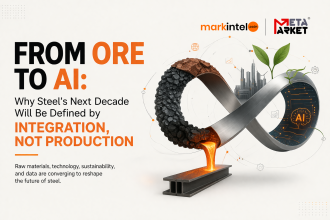
Artificial intelligence is changing the way steel is produced, managed, and sold. What was once an industry built on heat, scale, and human precision is now being shaped by data and algorithms. As energy costs rise and sustainability becomes a strategic priority, leading producers are turning to intelligent systems that can predict, learn, and optimize in real time.
The Rise of Data Driven Steelmaking
Modern steel plants generate enormous amounts of data each day from sensors, conveyors, furnaces, and logistics systems. For years, this information was underutilized. Today, machine learning models are helping engineers anticipate equipment failures, maintain process stability, and reduce waste. Predictive maintenance is cutting downtime by nearly fifteen percent, and AI assisted process control is improving yield by about three percent. These incremental gains have a significant financial impact in an industry where even a single percentage improvement can save crores annually.
Tata Steel and the Discipline of Data
Tata Steel stands as a leader in using artificial intelligence within the global metals sector. A McKinsey case study titled How a Steel Plant in India Tapped the Value of Data and Won Global Acclaim describes how Tata Steel’s Kalinganagar facility applied analytics to optimize its superheating process, a critical parameter that influences both metal quality and energy efficiency. The model, trained on years of operational data, now provides real time recommendations that have stabilized output, improved consistency, and lowered fuel use.
Across its operations, Tata Steel has deployed more than five hundred AI models covering maintenance, logistics, and production. Its analytics center in Jamshedpur uses neural networks to adjust furnace parameters dynamically, achieving measurable reductions in coke rate and carbon emissions. A Harvard Business School study on Tata Steel’s digital transformation highlights how the company combined technology with organizational culture by training its workforce in analytics and digital thinking. Tata also collaborated with Tata Elxsi to implement AI and Internet of Things systems across its service centers, improving material visibility and reducing scrap through cloud based inventory management.
JSW Steel and the Smart Factory Vision
JSW Steel has followed a similar digital path, building what it calls smart steel factories across India. According to its 2023–24 annual report, AI, machine learning, and connected sensors are now integral to daily operations. At the Vijayanagar plant, thousands of sensors continuously track heat, pressure, and vibration. Algorithms analyze these data streams to detect mechanical stress and suggest interventions before breakdowns occur. Predictive quality systems have also been deployed to improve surface finish and reduce rejection rates.
JSW has extended AI use into demand forecasting by training models on sales history, price behavior, and regional consumption patterns. This has helped align production with demand, improving inventory turnover and delivery accuracy. The company’s own disclosures confirm that predictive maintenance, energy optimization, and digital monitoring are now embedded across its production lines.
The Larger Picture
The experiences of Tata Steel and JSW Steel show that artificial intelligence in the steel industry is no longer experimental. It has become essential to competitiveness. Around the world, producers such as POSCO, Thyssenkrupp, and US Steel are adopting digital twins, computer vision, and AI enabled sustainability programs. India’s steelmakers are proving that modernization can coexist with craftsmanship. The modern mill still relies on human intuition, but that intuition is now strengthened by intelligent systems that learn from every data point.
The Road Ahead
The path to full scale adoption will not be simple. Integrating legacy systems, ensuring data reliability, and developing skilled digital teams remain major tasks. Yet the direction is clear. The next generation of steel leadership will not depend on who operates the largest furnace but on who runs the smartest one.
Sources:
McKinsey & Company: How a Steel Plant in India Tapped the Value of Data and Won Global Acclaim
Harvard Business School Case: Digital Transformation at Tata Steel
Tata Elxsi: Building AI Driven Sustainable Automation for Steel Industry
JSW Steel: Smart Steel Factories and Integrated Annual Report 2023–24
World Steel Association: Digital Transformation in Steel 2024
Disclaimer: Information presented in this article is drawn from publicly available sources including McKinsey, Harvard Business School, Tata Elxsi, JSW Steel Annual Reports, and the World Steel Association. Markintel has independently analyzed and interpreted these insights for educational and research purposes; it does not represent the official views of any cited organization.